

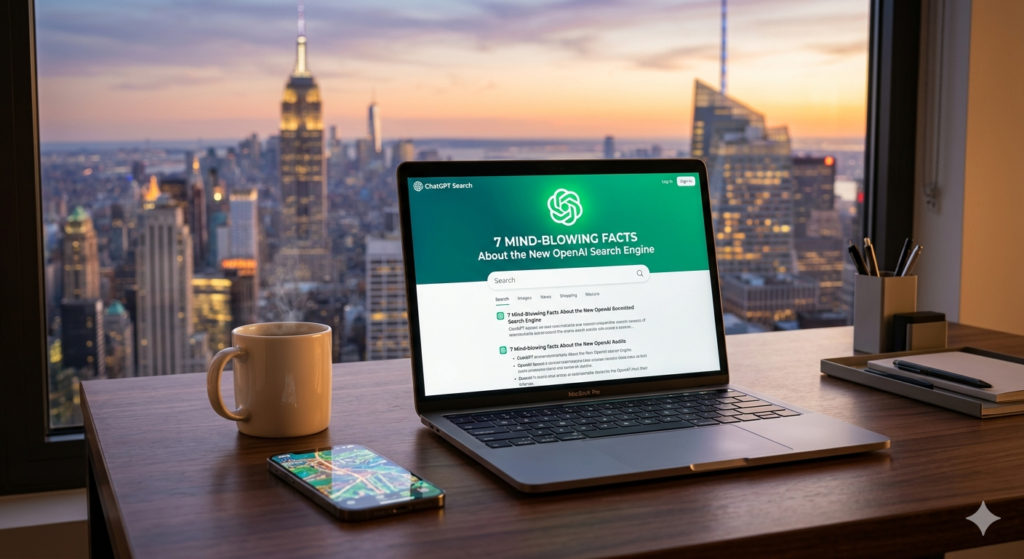
The world of the internet is buzzing with a question that seemed impossible just a few years ago. Is Google’s reign finally under threat? For decades, we have used “Google” as a verb, but the rise of artificial intelligence is shifting the ground beneath our feet. The OpenAI search engine, officially known as ChatGPT Search, is now a reality, promising to change how we browse the web forever.
Instead of just giving you a list of blue links, this new tool aims to provide direct answers. It blends the conversational power of AI with up-to-the-minute information from the internet. This isn’t just a small update; it is a major move by Sam Altman and his team to capture the one area of tech that Google has owned for a generation.
What Exactly is the OpenAI Search Engine?
At its core, the OpenAI search engine is an enhancement of the existing ChatGPT platform. Previously, the AI was limited by its training data, which often had a “cutoff” date. If you asked about news from ten minutes ago, it might not know the answer. Now, that wall has come down.
The tool now crawls the web in real-time to find facts, sports scores, stock quotes, and weather updates. It then synthesizes this information into a readable summary. This means you get the depth of a search engine with the friendly, easy-to-understand tone of a chat bot.
Key Features of ChatGPT Search: OpenAI Search Engine
What makes this different from a standard search? OpenAI has focused on making the experience feel more natural. They want you to feel like you are talking to a very smart librarian rather than a machine.
- Real-Time Data Access: You can now get live updates on the latest news and events as they happen.
- Conversational Context: You can ask follow-up questions without repeating your initial search, as the AI remembers what you were talking about.
- Source Transparency: Every answer includes clear citations and links to the original publishers, so you can verify the facts yourself.
- Visual Maps and Images: The search provides visual elements for weather, locations, and products to help you make decisions faster.
How OpenAI Search Engine Challenges Google: OpenAI Search Engine
Google has been the king of search since the late 1990s. It controls over 90% of the global market. However, many users have complained that Google results are now cluttered with ads and SEO-optimized junk. This is where OpenAI sees an opportunity.
Speed and Directness
When you search for something on Google, you often have to click through three or four websites to find a specific answer. The OpenAI search engine attempts to give you that answer immediately. By cutting out the middleman, it saves the user time and frustration.
A Focus on Content Partnerships
To avoid the legal battles that have plagued AI, OpenAI has signed major deals with news organizations. They are working with big names like Le Monde, Axel Springer, and The Associated Press. These partnerships ensure that the AI has access to high-quality, verified journalism.
The Role of Perplexity and Other Rivals: OpenAI Search Engine
It is important to note that OpenAI isn’t the only one trying to dethrone Google. Another company called Perplexity has been gaining a lot of fans for its AI-first search approach. Even Microsoft has been pushing Bing AI (now Copilot) very hard.
However, OpenAI has a massive advantage: 250 million weekly active users. Because so many people already use ChatGPT, adding search features to the existing app makes it very easy for people to switch their habits. You don’t have to go to a new website; you just keep using the tool you already like.
Is the New AI Search Reliable?
One of the biggest worries with AI is “hallucinations,” which is when a bot confidently states something that is completely false. To combat this, the OpenAI search engine relies heavily on its citations.
Checking the Facts
When the AI gives an answer, it provides a sidebar with links to the sources it used. This encourages users to be skeptical and check the original reporting. By keeping the human element and the original publishers in the loop, OpenAI hopes to maintain a high level of accuracy.
Who Can Access ChatGPT Search Right Now?
If you want to try the OpenAI search engine, there is a specific rollout plan. It is not available to everyone for free just yet.
- Plus and Team Users: Those who pay for a monthly subscription can access the search features right now.
- SearchGPT Waitlist: Users who signed up for the early prototype also have access.
- Free Users: OpenAI has promised to bring these search capabilities to free users over the coming months.
- Enterprise and Edu: Business and education accounts are also getting access in the very near future.
Final Thoughts
The launch of the OpenAI search engine marks a massive shift in the tech landscape. While Google is fighting back with its own AI Overviews, the competition has never been this fierce. For the first time in twenty years, users actually have a choice in how they find information on the web.
Ultimately, this battle is good for us. It forces companies to innovate and focus on what the user actually wants: fast, accurate, and helpful answers. Whether ChatGPT Search becomes the new “Google” remains to be seen, but the journey has definitely begun.
Are you ready to stop Googling and start chatting? Keep an eye on your ChatGPT app for the new search icon and try it out for yourself today!
Read Other Interesting news here: D-Wave Earnings Report
