

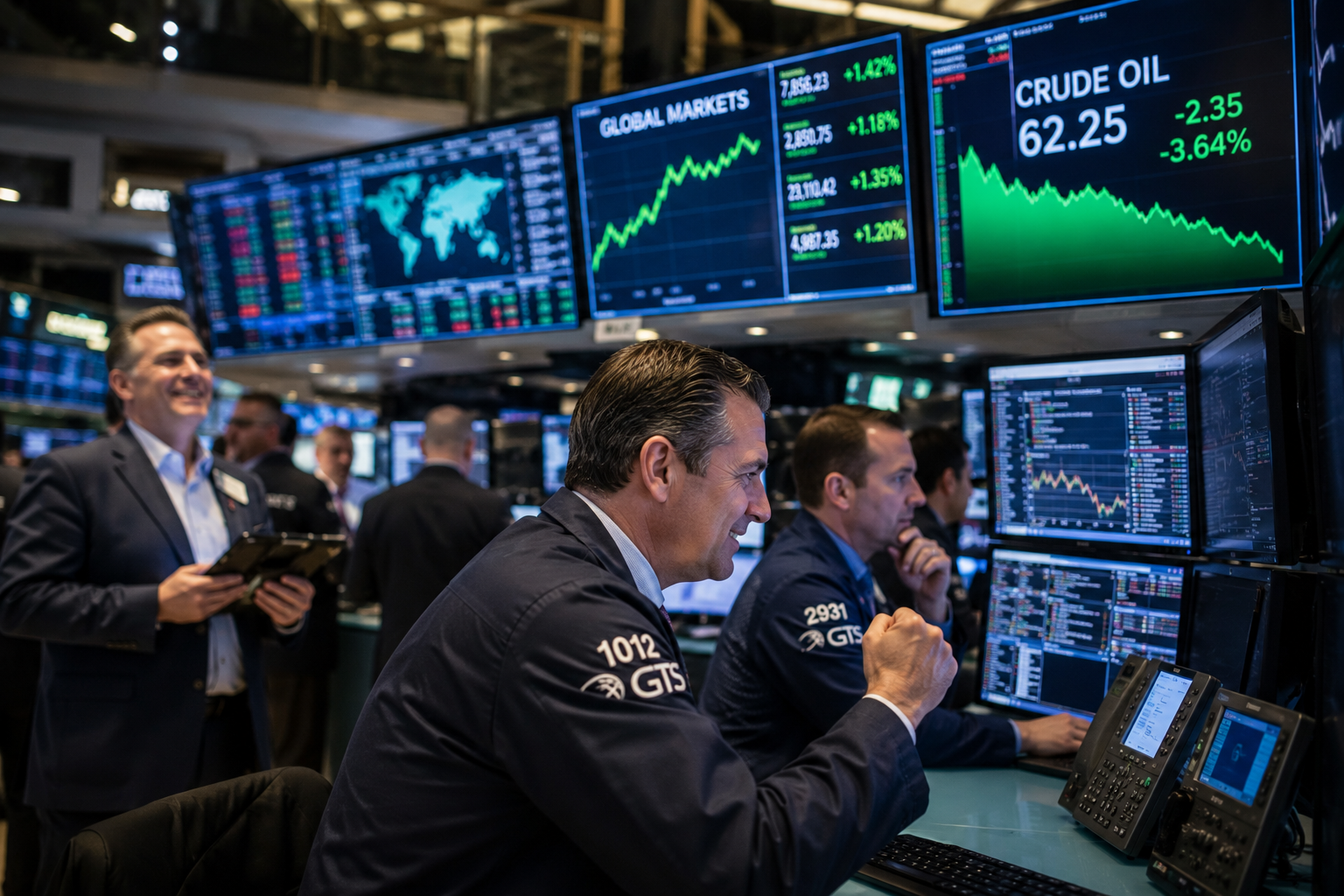
Global financial markets reacted sharply as hopes of a possible oil prices Iran deal grew stronger. Investors around the world rushed back into stocks while oil prices cooled off, following signals that diplomatic progress may be underway between the United States and Iran.
The mood in trading rooms shifted quickly from fear to cautious optimism. After weeks of tension in the Middle East, even a hint of dialogue between Washington and Tehran was enough to move billions of dollars across markets in a single day.
A Sudden Shift in Global Market Sentiment – Oil Prices
Financial markets are often driven by expectations, and this time was no different. News that Donald Trump sees “great progress” toward a final agreement with Iran changed the direction of global trading.
Oil prices dropped, while equities surged across major regions. Investors interpreted the development as a possible easing of supply disruptions in a region that plays a critical role in global energy flows.
Key market reactions included:
- Brent crude oil slipped to around $107 per barrel
- Global stock indexes hit fresh records
- AI-driven tech stocks led the rally
- Emerging markets saw strong buying interest
This combination created a classic “risk-on” environment in global finance.
Why the Strait of Hormuz Matters So Much
A central factor in this story is the Strait of Hormuz, one of the most important oil transit routes in the world. Around one-fifth of global oil passes through this narrow waterway.
Earlier tensions in the region had disrupted shipping and raised fears of long-term energy shortages. The situation pushed oil prices sharply higher in previous weeks, even crossing $120 per barrel at one point.
However, the latest developments suggest a possible easing of pressure on this route, which is why markets reacted so strongly.
Trump’s “Project Freedom” Pause and Its Impact – Oil prices Iran deal
One of the most important signals came when Donald Trump announced a temporary pause in a naval escort operation known as “Project Freedom.”
This operation had been helping guide ships through the Strait of Hormuz during ongoing tensions. The pause was presented as a short-term step linked to diplomatic progress with Iran.
However, the situation remains complex:
- The operation pause is temporary
- A blockade on Iranian ports is still active
- Diplomatic discussions are ongoing but not finalized
This mix of easing and continued pressure created uncertainty, but markets focused more on the positive tone of negotiations.
Oil Prices React to Supply Expectations – Oil prices Iran deal
Energy traders reacted immediately to the possibility of improved supply conditions. With fears of disruption easing, oil prices began to fall for a second straight session.
Recent movements included:
- Brent crude fell by nearly 2%
- WTI crude dropped close to $100 per barrel
- Earlier weekly highs were above $126 per barrel
The decline reflects how sensitive oil markets are to geopolitical news. Even small changes in expectations about supply can trigger large price swings.
Still, analysts caution that prices remain elevated compared to normal historical levels.
Stock Markets Rally on Risk Appetite – Oil prices Iran deal
While oil prices fell, global stock markets moved in the opposite direction. Investors returned to equities in search of growth opportunities.
The rally was broad-based:
- Asia-Pacific markets surged, with major indexes hitting record highs
- South Korea’s Kospi led gains with a strong jump
- U.S. markets also posted fresh records
- European stocks followed the positive momentum
Technology stocks, especially AI-related companies, attracted significant investment flows. This shows how quickly investor confidence can shift when geopolitical risks appear to ease.
Currency and Commodity Market Reactions – Oil prices Iran deal
The impact of the oil prices Iran deal narrative was not limited to stocks and oil. Currency markets also reacted strongly.
- The U.S. dollar weakened against major currencies
- The Japanese yen strengthened significantly
- European currencies like the euro and pound gained value
At the same time, commodities responded to improved risk sentiment. Gold saw mixed movement as investors balanced safety concerns with optimism about peace talks.
Why Investors Are Still Cautious – Oil prices Iran deal
Despite the strong rally, uncertainty has not disappeared. Markets are still aware that negotiations between the U.S. and Iran are fragile and could shift quickly.
Key risks include:
- No final agreement has been signed
- Regional tensions remain active
- Supply routes are still vulnerable
- Political decisions can change rapidly
This means the current rally is driven more by expectations than confirmed outcomes.
What This Means for Global Inflation and Energy Costs
Oil prices play a major role in global inflation. When energy costs rise, transport, manufacturing, and consumer goods become more expensive.
A possible easing in oil prices could:
- Reduce pressure on global inflation
- Support central banks in controlling interest rates
- Improve consumer spending power
- Stabilize fuel prices in importing countries
However, if negotiations fail or tensions return, prices could spike again just as quickly.
How Investors Around the World Responded
The moment when oil prices ease also triggered reactions from investors across Europe, Asia, and North America. Financial markets generally respond positively when geopolitical tensions appear to calm because stability helps businesses plan more confidently for the future.
Several analysts explained that investors were especially encouraged by the possibility of improved diplomatic communication involving Iran. Reduced uncertainty often supports stronger market activity because traders feel more comfortable making long-term investment decisions.
The latest developments connected to the situation where oil prices ease also improved sentiment in sectors heavily dependent on energy costs. Transportation companies, manufacturing firms, and international logistics businesses all benefit when fuel prices become less expensive.
Global stock indexes showed signs of recovery as optimism spread through financial markets. Investors viewed the diplomatic progress as a possible sign that larger regional conflict could be avoided for now.
At the same time, many experts warned that market optimism could still change quickly depending on future political developments. The relationship between diplomacy and financial stability remains extremely sensitive, especially in regions connected to major energy supplies.
The latest reaction demonstrates how deeply global economies depend on political stability in strategic regions like the Middle East.
Consumers Could Feel the Impact of Lower Oil Prices
The latest moment where oil prices ease may eventually provide some relief for consumers dealing with higher living costs and inflation pressure.
Oil prices directly affect many parts of everyday life because energy plays a major role in transportation, manufacturing, and product distribution. When oil becomes cheaper, businesses sometimes experience lower operating costs, which can eventually help reduce pressure on consumers.
Some possible effects linked to lower oil prices include:
- Reduced fuel prices
- Lower shipping costs
- Improved airline pricing
- Reduced transportation expenses
- More stable supply chains
Although changes are not always immediate, energy market movements often influence household expenses over time.
The recent developments involving Iran negotiations and the situation where oil prices ease therefore matter not only to governments and investors, but also to ordinary people worldwide.
Consumers continue watching energy prices carefully because fuel and transportation costs remain important parts of monthly budgets. As global economic uncertainty continues, any sign of market stability can improve public confidence significantly.
The latest diplomatic progress has therefore created cautious optimism that energy markets may remain more stable in the near future.
Final Thoughts – Oil prices Iran deal
The latest developments around the oil prices Iran deal highlight how closely global markets are tied to geopolitics. A single announcement about potential progress in negotiations was enough to trigger a worldwide rally in stocks and a drop in oil prices.
For now, investors are betting on diplomacy rather than conflict. But the situation remains fluid, and markets are likely to stay sensitive to every new update.
If progress continues, energy prices could stabilize further, supporting global economic growth. But if talks break down, volatility may return just as quickly.
Read another interesting news here: Strait of Hormuz
