

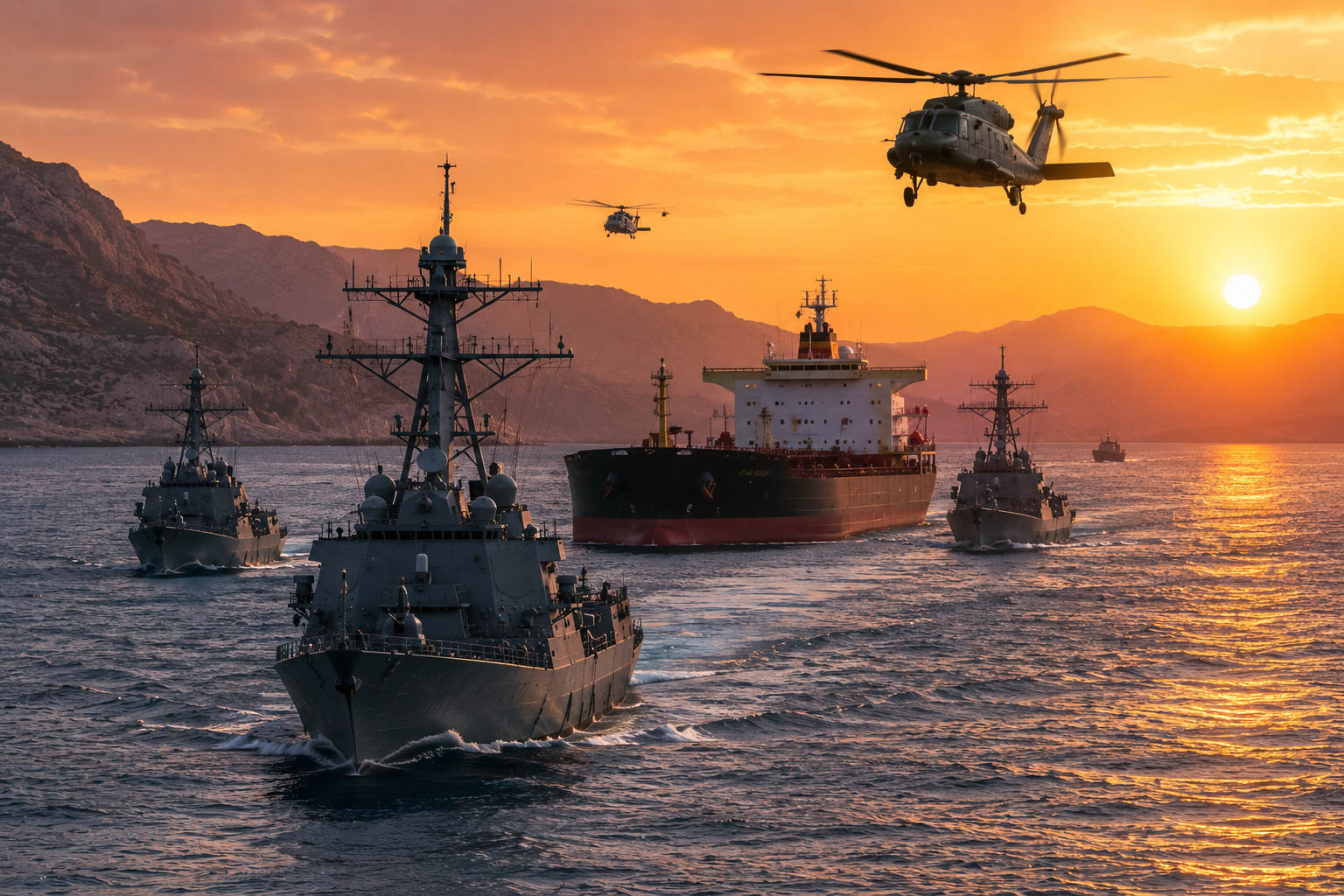
The Strait of Hormuz ceasefire is holding for now, but the situation in the Middle East remains tense and uncertain. While the United States says it wants to avoid a larger conflict with Iran, military activity around one of the world’s most important waterways continues to worry global leaders, shipping companies, and energy markets.
In recent days, the Pentagon confirmed that American forces are still guiding commercial ships through the Strait of Hormuz after attacks linked to Iran targeted vessels and US military assets. At the same time, President Donald Trump announced a temporary pause in some military operations to create room for diplomacy.
The situation has become a delicate balancing act. Both Washington and Tehran claim they want stability, yet both sides continue to exchange warnings while military forces remain active across the Gulf region.
Why the Strait of Hormuz Matters So Much – Strait of Hormuz Ceasefire
The Strait of Hormuz is one of the most important shipping routes in the world. Before the conflict intensified, around 20 percent of global oil and gas supplies passed through this narrow waterway every day.
Any disruption in the area quickly affects:
- Global oil prices
- Fuel costs
- Shipping rates
- International trade
- Energy security
As tensions between the US and Iran increased earlier this year, commercial traffic through the strait slowed dramatically. Hundreds of vessels became trapped in the region, leaving thousands of sailors waiting for safe passage.
That pressure pushed world leaders to search for a ceasefire before the economic damage became even worse.
Pete Hegseth Says the Ceasefire Is Still Active – Strait of Hormuz Ceasefire
US Defense Secretary Pete Hegseth said the ceasefire between the United States and Iran has not collapsed, even after several recent attacks in the Gulf region. During a Pentagon briefing, Hegseth explained that the US mission in the strait is defensive and temporary.
According to Pentagon officials, Iran has:
- Fired at commercial vessels multiple times
- Seized container ships
- Attacked US forces more than 10 times since the ceasefire began
However, military leaders said those incidents remain below the level that would restart full-scale combat operations.
Hegseth also stated that the US created what he described as a “red, white and blue dome” over the strait to help commercial vessels move safely through the area. He stressed that America expects allies and partner nations to eventually take over responsibility for securing shipping routes.
What Is “Project Freedom”? – Strait of Hormuz Ceasefire
The United States launched a maritime operation called Project Freedom to help reopen shipping lanes in the Strait of Hormuz.
The operation includes:
- Guided missile destroyers
- Fighter aircraft
- Drones
- Thousands of military personnel
US officials say the mission is meant to protect commercial shipping and prevent economic disruption across global markets.
Still, the operation has sparked strong reactions from Iran.
Iranian officials accused Washington of violating the ceasefire agreement and increasing military pressure in the Gulf. Iranian Foreign Minister Abbas Araghchi warned that there is “no military solution” to the crisis and urged diplomatic negotiations instead.
The disagreement highlights how fragile the current truce remains.
Trump Pauses Parts of the Military Mission – Strait of Hormuz Ceasefire
President Donald Trump recently announced a temporary pause in parts of the US military operation connected to the Strait of Hormuz crisis.
The White House described the move as a goodwill gesture aimed at supporting peace talks with Iran. Reports said the decision came after requests from countries including Pakistan, which encouraged both sides to allow diplomacy more time.
Trump warned that if negotiations fail, military action could quickly return.
Even with the pause, the US continues to maintain pressure on Iran through naval blockades and military deployments in the region.
The president has framed the mission as partly humanitarian because thousands of sailors and commercial crews remain stuck near the Gulf due to security concerns.
Commercial Ships Still Face Serious Risks – Strait of Hormuz Ceasefire
Although the ceasefire technically remains active, the Strait of Hormuz is still far from safe.
US military officials revealed that:
- More than 1,550 commercial ships are waiting to pass through the area
- Over 22,500 mariners remain affected
- Several attacks have targeted vessels since the truce began
Military commanders said Iran used:
- Fast attack boats
- Drones
- Coastal cruise missiles
- Small arms fire
against vessels moving through the strait. Fortunately, some attacks failed to hit their targets directly.
Even so, shipping companies remain cautious. Many operators still hesitate to send vessels through the region because the threat of escalation has not disappeared.
Oil Markets React to Every New Development – Strait of Hormuz Ceasefire – Strait of Hormuz Ceasefire
The global energy market has become extremely sensitive to developments surrounding the Strait of Hormuz ceasefire.
When fighting intensified earlier this year:
- Oil prices surged
- Shipping insurance costs increased
- Fuel prices climbed worldwide
Now, every diplomatic signal or military incident causes another market reaction.
Recent reports showed that financial markets responded positively after Trump paused part of the military mission and peace talks appeared to make progress. Oil prices dropped slightly while investor confidence improved.
However, analysts warn that even one major attack in the strait could reverse those gains almost immediately.
Diplomacy Continues Behind the Scenes – Strait of Hormuz Ceasefire
Despite public tensions, diplomatic talks between the US and Iran continue through intermediaries.
Reports suggest negotiators are discussing a possible agreement that could include:
- Limits on Iran’s nuclear activities
- Reduced military tensions
- Easier transit through the Strait of Hormuz
- Sanctions relief measures
Several countries are also trying to help prevent another major conflict in the region.
Pakistan has played an active role in encouraging dialogue, while China remains involved in discussions with Iranian officials.
Still, major disagreements remain unresolved, especially regarding Iran’s regional influence and future military activity.
The Ceasefire Remains Fragile – Strait of Hormuz Ceasefire
The current situation shows how difficult it is to maintain peace during a larger geopolitical crisis.
On one side, the United States insists that freedom of navigation through international waters must be protected. On the other side, Iran argues that foreign military operations near its coastline increase instability.
Military exchanges have become smaller and more controlled since the ceasefire began, but tensions continue almost daily. Pentagon officials admitted that the risk of renewed combat still exists if attacks become more serious.
That uncertainty is why many governments and businesses are watching the Strait of Hormuz very closely.
Final Thoughts
The Strait of Hormuz ceasefire may still be active, but the situation remains extremely delicate. The United States continues to protect commercial shipping while Iran pushes back against foreign military pressure in the Gulf.
For now, diplomacy appears to be preventing a wider war. Yet attacks on vessels, military warnings, and rising global economic fears show how quickly conditions could change.
The coming weeks will likely determine whether peace talks can create long-term stability or whether the region moves back toward open conflict.
As global markets, energy companies, and governments wait for answers, the Strait of Hormuz remains one of the world’s most dangerous and important flashpoints.
Read another interesting news here: Morning Briefing
